8,295 Units: The Number That Killed the Cybertruck in the Southern Hemisphere
Tesla has voided Australian and New Zealand Cybertruck reservations after seven years, a move analysts suggest was driven by a mismatch between global production capacity and right-hand drive demand.
By Neha Iyer ·
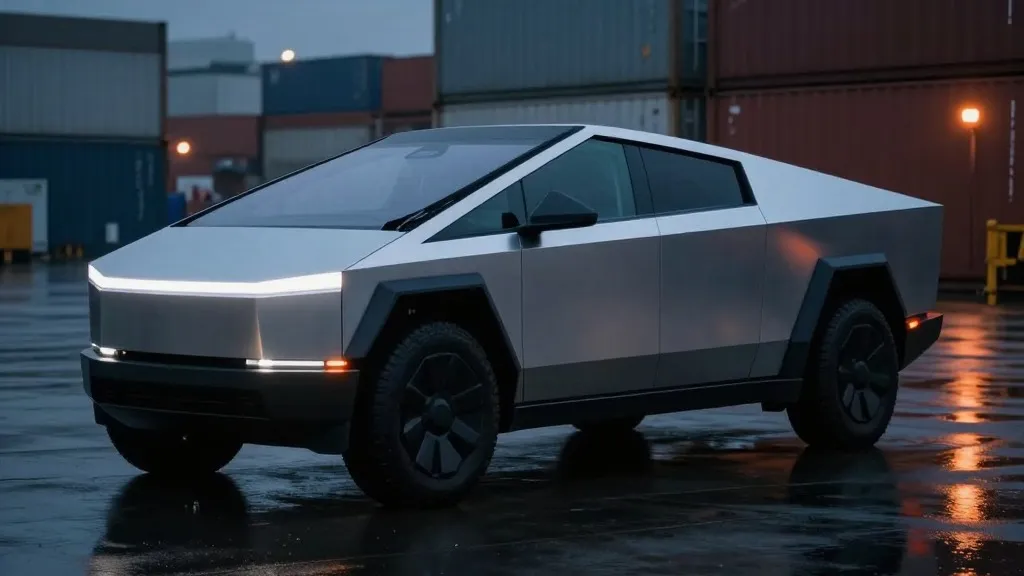
Tesla has officially terminated its plans to bring the Cybertruck to Australia and New Zealand, sending emails to reservation holders today to notify them that their orders are void. This development concludes a nearly seven-year period of waiting for customers who first paid A$150 to secure a spot in November 2019. While the automaker has promised full refunds within 30 days, the cancellation arrives just one day after Tesla reported its Q3 2026 earnings, raising questions about the timing and the strategic rationale behind the decision.
The primary obstacle appears to be a fundamental engineering mismatch. The Cybertruck is currently manufactured exclusively in a left-hand-drive configuration, which is incompatible with the driving standards in Australia, New Zealand, the UK, and Japan. For the Australian market specifically, the vehicle would also require certification under local design rules, representing a significant financial investment. Given that the truck has been experiencing demand softness in its primary North American market, the cost of re-engineering the vehicle for a combined population of approximately 33 million people is becoming increasingly difficult to justify.
Recent production data suggests that the global volumes do not yet support a dedicated right-hand-drive program. In the third quarter of 2026, Tesla delivered only 8,295 units in the 'Other Models' category, a segment that now almost entirely consists of Cybertrucks following the end of Model S and Model X production. Estimates place actual Cybertruck sales between 7,000 and 8,000 units for the quarter, translating to an annual pace of roughly 30,000 vehicles. This figure is starkly lower than the 250,000 annual capacity of the production line, leading to speculation that financial leadership may have hesitated to approve the capital expenditure required for international adaptation.
The path to this conclusion has been marked by periods of silence and shifting priorities. Tesla quietly closed its Australian reservation page in May 2022, replacing it with a 'Get updates' button, but did not issue refunds at that time. In 2024, the company shipped a display unit to the region, and CEO Elon Musk told shareholders that certification for other markets might occur 'next year.' However, no right-hand-drive version materialized, and the truck remains blocked in the European Union primarily due to pedestrian safety regulations. International launches to date, including in South Korea and the UAE, have been limited to left-hand-drive markets.
To mitigate the disappointment among existing reservation holders, Tesla is offering a free one-year subscription to its Full Self-Driving (Supervised) feature for those who pivot to ordering a Model 3 or Model Y. This strategy appears designed to convert stalled pickup truck reservations into sales of vehicles that are already being built in right-hand-drive configurations. While a crowdsourced survey in 2020 indicated Australia was the third-largest market for Cybertruck reservations, with roughly 3% of the global total, Tesla has never officially confirmed these regional figures.
The cancellation leaves open questions about the long-term international strategy for the model. With US sales having dropped significantly from their 2024 peak, the Cybertruck is increasingly being viewed as a niche product with limited global scalability. The decision to halt the Australian and New Zealand rollout suggests that Tesla is prioritizing the efficient distribution of existing left-hand-drive inventory over the costly development of new regional variants.
For the nearly seven years since the initial deposits were taken, customers were left in a state of limbo, with the reservation page closed but no formal cancellation notice sent until now. While many may have already canceled their pre-orders due to the vehicle's evolving specifications and pricing, the official discontinuation marks a definitive end to the era of speculative waiting for a truck that was never destined for the right side of the road.
Source: Electrek